Strategic Insights
Real-time strategic intelligence, FDA updates, competitive analysis, and commercial insights from our life sciences experts — curated for pharmaceutical decision-makers.
Showing 9 of 43 insights
ONCOLOGY THE REAL THERAPY FOR A BETTER TOMORROW
Oncology is rapidly shifting from one-size-fits-all treatment toward biomarker-led, targeted and individualized therapies. The material highlights four major clinical trends: targeted combinations, earlier use of antibody-drug conjugates (ADCs), more precise immunotherapy, and the continued expansion of cell therapies such as CAR-T. The global need remains enormous, with the material citing ~20 million new cancer cases, 9.74 million cancer deaths and 53.5 million people living within five years of diagnosis based on GLOBOCAN 2022. This creates a strategic imperative to connect science, data and patient access so that clinical innovation translates into measurable patient benefit. The competitive landscape is also evolving beyond traditional Big Pharma. The report identifies 20 mid-size/specialist biotech companies working across CAR-T, ADCs, bispecific antibodies, RAS inhibitors, precision oncology, targeted degraders and other emerging platforms. Looking beyond 2025, five strategic shifts stand out: Science, Precision, Data, Access and Collaboration. Biomarker-led enrollment, molecular profiling, real-world evidence, ctDNA, integrated clinical data, better diagnostics/manufacturing and collaboration between biotech, pharma, academia and health systems are expected to shape the next phase of oncology innovation. Bottom line: The future of oncology is not simply about extending survival—it is about using precision science, data and collaboration to deliver the right therapy to the right patient while improving quality and possibility of life.
India's Biologics & Biosimilars Opportunity 2026: Top 20 Therapy Areas Driving the Next Pharmaceutical Growth Wave
India is rapidly emerging as a global biologics and biosimilars hub, supported by rising disease burden, expanding manufacturing capabilities, favorable government initiatives, and increasing domestic and international demand. This strategic insight analyzes the top therapy areas, market trends, competitive landscape, and investment opportunities shaping India's biologics market in 2026.
Amgen MariTide Strategic Insights 2025-2035
MariTide has the potential to redefine the next decade of obesity treatment by combining differentiated efficacy, extended dosing intervals, and lifecycle expansion beyond weight management into broader cardiometabolic diseases. If Amgen demonstrates strong long-term efficacy, tolerability, and scalable manufacturing, MariTide could emerge as one of the most significant challengers to today's GLP-1 market leaders.
Chugai Pharmaceutical Strategy (2025–2035): GYM329 and the Future of Spinal Muscular Atrophy (SMA) Innovation
Chugai Pharmaceutical's GYM329 represents a strategic investment in next-generation therapies for Spinal Muscular Atrophy (SMA), reflecting the company's long-term focus on neuromuscular diseases and precision medicine. As the rare disease landscape evolves, innovative molecular therapies like GYM329 could strengthen Chugai's competitive position while expanding treatment options for patients with high unmet medical needs.
Global CDMO Market Landscape (2025–2035): Strategic Outlook for Pharmaceutical Manufacturing
The global Contract Development and Manufacturing Organization (CDMO) market is entering a new phase of growth, driven by increasing outsourcing, rapid expansion of biologics and Cell & Gene Therapies, and rising demand for specialized manufacturing capabilities. Over the next decade, successful CDMOs will differentiate themselves through technology-driven manufacturing, end-to-end service integration, global capacity expansion, and strategic partnerships with pharmaceutical innovators.
China’s Biotech Boom 2025-2035
China's biotechnology sector is entering a transformative decade, fueled by rapid innovation, expanding R&D investments, and a growing global footprint. As regulatory reforms accelerate and domestic funding remains resilient, China is positioning itself to become one of the world's leading biotech innovation hubs by 2035 despite ongoing geopolitical and market access challenges.
Keytruda in Head & Neck Cancer (HNSCC): Strategic Deep Dive into Label Expansion, Market Access & Competitive Landscape (2025–2035)
Merck's Keytruda continues to shape the treatment landscape in Head & Neck Squamous Cell Carcinoma (HNSCC), but evolving label restrictions, biomarker-driven patient selection, and increasing competition from next-generation immunotherapies are redefining commercial success. This strategic analysis explores the clinical, regulatory, market access, and competitive implications that will influence Keytruda's position in HNSCC through 2035.
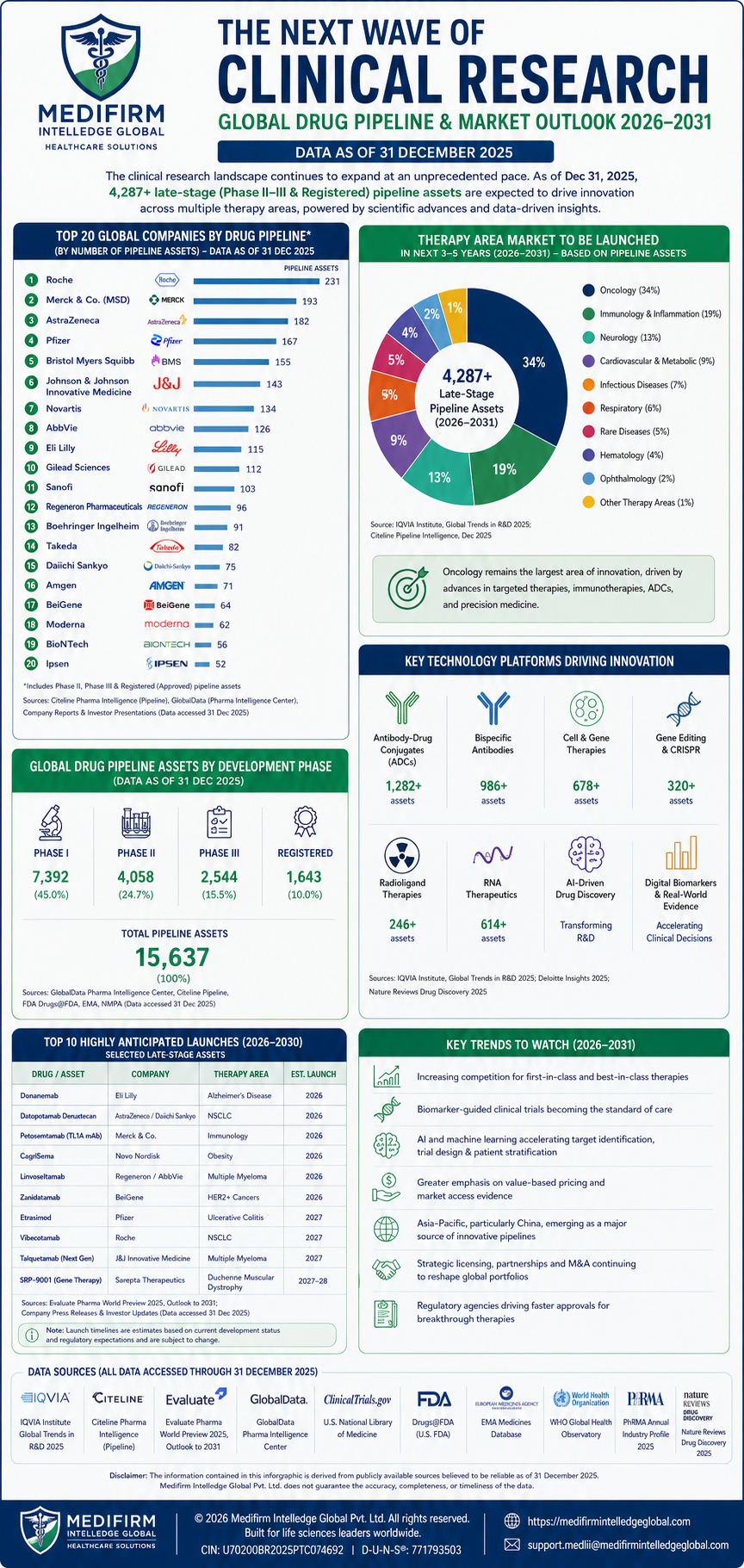
The Next Wave of Clinical Research: Global Drug Pipeline & Market Outlook (2026–2031)
An executive analysis of the global pharmaceutical pipeline as of 31 December 2025, highlighting the top companies, emerging therapy areas, breakthrough technologies, and strategic trends expected to shape drug development and commercialization over the next 3–5 years.
The future of Oncology, 2026-2032
The future of oncology belongs to organizations that combine precision medicine, AI-driven patient selection, biomarker strategies, and differentiated therapeutic platforms to accelerate innovation and commercial success. Explore Medifirm Intelledge Global's strategic outlook on the evolving oncology pipeline and the next generation of market leaders shaping cancer care worldwide.