Mounjaro Becomes the World's Best-Selling Prescription Medicine: A Strategic Shift in Global Pharma
Eli Lilly's Mounjaro (tirzepatide) has overtaken Merck's Keytruda to become the world's top-selling prescription medicine, highlighting a fundamental shift in pharmaceutical value creation toward metabolic diseases, commercial excellence, and lifecycle expansion.
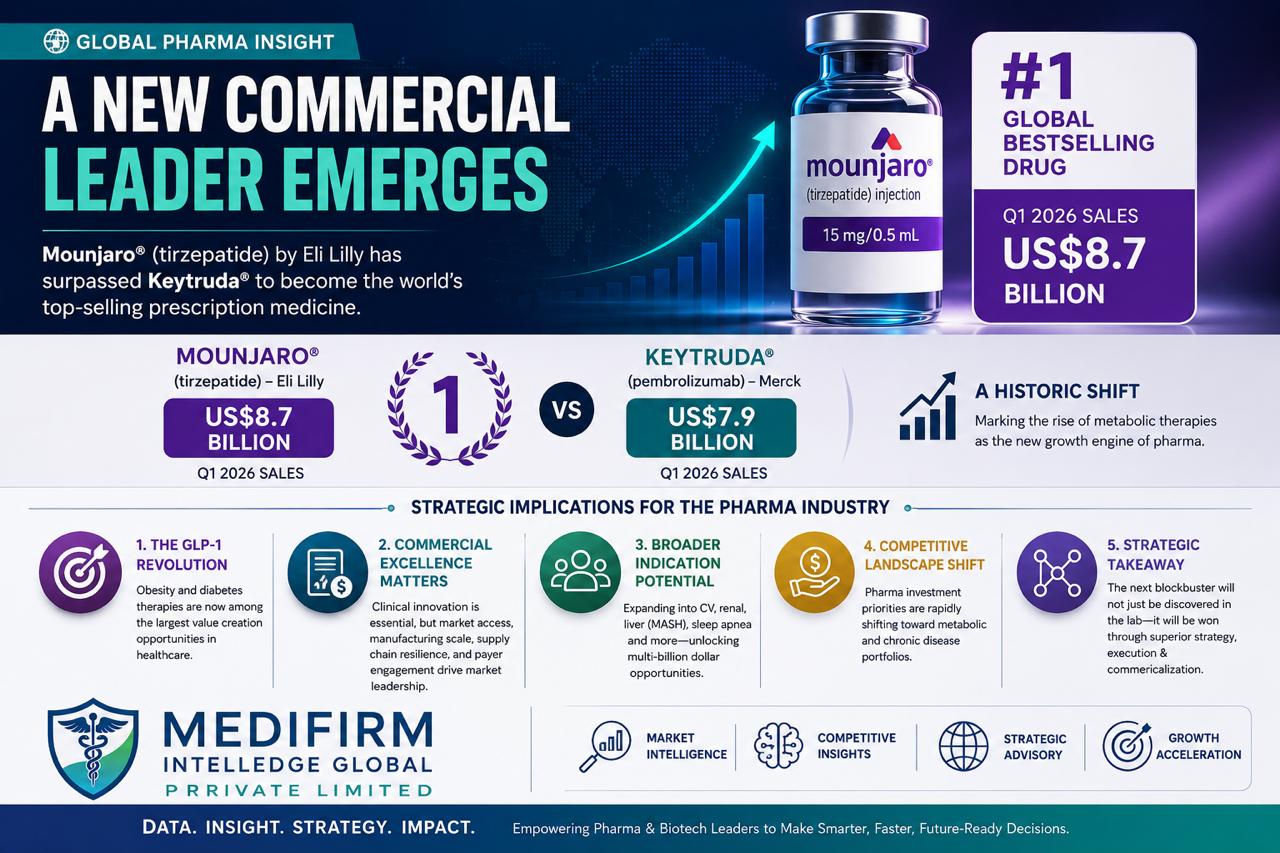
Mounjaro Becomes the World's Best-Selling Prescription Medicine
The pharmaceutical industry has reached a significant milestone.
Eli Lilly's Mounjaro® (tirzepatide) generated approximately US$8.7 billion in Q1 2026 sales, surpassing Merck's Keytruda®, which reported approximately US$7.9 billion during the same period. This marks one of the most important commercial transitions in recent pharmaceutical history.
While oncology continues to be a major therapeutic area, the rapid growth of metabolic therapies demonstrates how chronic disease management is reshaping the global pharmaceutical market.
---
Why This Matters
For nearly a decade, oncology therapies dominated global pharmaceutical revenues. The rise of GLP-1 and GIP-based therapies signals a new era where metabolic diseases represent one of the largest commercial opportunities in healthcare.
This shift reflects changing disease prevalence, broader patient populations, expanding indications, and increasing healthcare investment in obesity, diabetes, cardiovascular disease, and metabolic dysfunction.
---
Strategic Insights
1. The GLP-1 Revolution Has Entered a New Phase
Metabolic therapies have evolved beyond diabetes treatment.
Today, companies are pursuing broader indications including:
This creates substantial long-term revenue opportunities through lifecycle management.
---
2. Commercial Execution Is Now a Competitive Differentiator
Clinical innovation alone is no longer sufficient.
Market leaders increasingly distinguish themselves through:
Commercial execution has become a core competitive advantage.
---
3. Larger Patient Populations Are Reshaping Pharma Economics
Unlike precision oncology therapies that target relatively smaller patient populations, metabolic diseases affect hundreds of millions of people globally.
This significantly expands the commercial opportunity and supports sustained long-term growth.
---
4. Investment Priorities Are Changing
Pharmaceutical companies are increasingly investing in:
Capital allocation is shifting toward therapeutic areas with large population impact and scalable commercial potential.
---
5. Strategic Takeaway
The next blockbuster medicine will not succeed solely because of scientific innovation.
Future market leaders will combine:
Winning in today's pharmaceutical market requires excellence across the entire product lifecycle.
---
Executive Perspective
The rise of Mounjaro reflects more than exceptional commercial performance—it represents a broader transformation in pharmaceutical strategy.
As healthcare systems increasingly prioritize chronic disease management, companies that integrate scientific innovation with scalable manufacturing, payer engagement, and commercial excellence will be best positioned to lead the next generation of pharmaceutical growth.
---
Sources & Credits
Prepared by Medifirm Intelledge Global Private Limited