Takeda Strengthens Its Cell Therapy Strategy with New Boston R&D Manufacturing Center
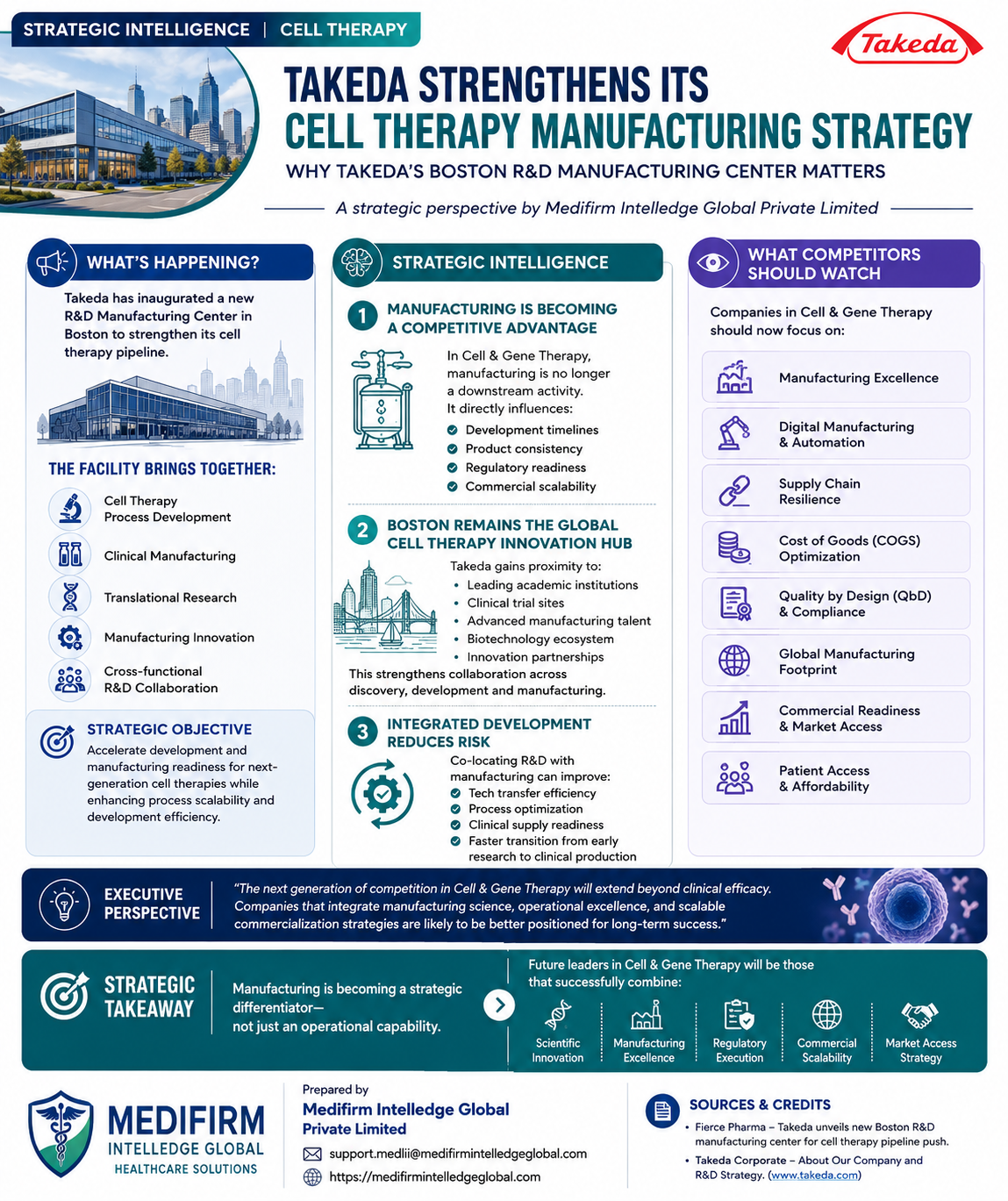
Takeda's new Boston R&D Manufacturing Center reflects a broader shift in Cell & Gene Therapy, where manufacturing excellence, operational scalability, and commercial readiness are becoming critical competitive differentiators alongside scientific innovation.
Takeda Strengthens Its Cell Therapy Strategy with New Boston R&D Manufacturing Center
The Cell & Gene Therapy landscape is rapidly evolving, and one trend is becoming increasingly clear—manufacturing is no longer just an operational function; it is a strategic capability.
Takeda recently unveiled its new Research & Development Manufacturing Center in Boston, Massachusetts, reinforcing its commitment to advancing cell therapy innovation. The new facility is designed to integrate research, process development, and clinical manufacturing to support the company's next-generation cell therapy pipeline.
Why This Matters
Unlike traditional pharmaceuticals, Cell & Gene Therapies require highly specialized manufacturing processes. Product quality, turnaround time, scalability, and regulatory compliance directly influence commercial success.
By bringing research and manufacturing closer together, Takeda aims to streamline technology transfer, accelerate clinical development, and improve manufacturing readiness for future commercialization.
Strategic Insights
Manufacturing Has Become a Competitive Advantage
For advanced therapies, manufacturing excellence can significantly impact:
Companies investing early in manufacturing capabilities are positioning themselves for long-term competitive success.
Boston Continues to Lead Cell Therapy Innovation
Boston remains one of the world's strongest biotechnology ecosystems, offering access to:
Establishing operations within this ecosystem strengthens collaboration and accelerates innovation.
Beyond Clinical Success
As Cell & Gene Therapy moves toward broader commercialization, competitive differentiation will increasingly depend on:
Scientific innovation alone will no longer define market leadership.
Key Takeaway
The future of Cell & Gene Therapy will be shaped by organizations that successfully combine scientific discovery with scalable manufacturing, regulatory excellence, and commercial execution.
Manufacturing is rapidly becoming one of the most important strategic assets in advanced therapeutics.
---
Sources & Credits
Prepared by Medifirm Intelledge Global Private Limited